
Air is Kin Academy
The AIK Academy is an opportunity to learn about the various parts of environmental justice, including its history, the science behind air pollution, how air pollution affects our bodies and minds, and guidance for advocacy at your own pace.
You can either start the course from the beginning and follow our module and lesson guideline, or feel free to read the outline below and select specific lessons.
Listen to the introduction here and begin your journey when you’re ready.
AIK Academy
-
Module 1: How to Understand Environmental Injustice
-
Lesson 1: A History of Disease and its Link to Environmental Injustice
This lesson's content is brought from Episode 2: Epistemologies of our Planetary Dysregulation, Capitalism, And Healthcare podcast miniseries.
Guppi Bola, a senior consultant strategist with over fifteen years experience in economics, health and climate issues, will be covering the epistemologies of supremacy and how they are used to imagine policies, understandings of health, and economies
-
Lesson 2: Why Companies Are Allowed to Pollute Our Air
Hannah Yu-Pearson and Josh Artus from Centric Lab are speaking with us about how we measure air pollution and the mechanisms that give companies the Right to Pollute our communities.
They also share insights into the importance of our relationship with our environment and the philosophies needed to advocate for a justice-based view of health.
-
Lesson 3: Air as Health
Dr Julia Pescarini at London School of Hygiene and Tropical Medicine to speak with us about the role of epidemiology in understanding and addressing health injustice.
Through epidemiology’s focus on policy and populations, we can form other approaches to structural air pollution advocacy
-
Lesson 4: Air as a Planetary Crisis
Prof Ilan Kelman at University College London speaks with us about defining Air pollution as a planetary crisis.
Ilan shares insights as a professor of Disasters and Health on what structurally contributes to this planetary crisis plus some suggestions on what changes and interventions are needed.
-
Lesson 5: Air as Kin
Dr Jake Robinson, a microbiologist and restorist at Flinders University, speaks with us about Air from a chemical and a life perspective.
Jake recently founded the Aerobiome Innovation and Research Hub (The AIR Hub), an initiative aiming to research and safeguard the beneficial biological components of air for both human and ecosystem health, and shares some of his principles and insights around our relationship with Air.
-
-
Module 2: How to understand ecological health
-
Lesson 1: Defining Ecological Health
In this lesson Araceli Camargo, Daniel Akinola-Odusola and Hannah Yu-Pearson, all members of the Centric Lab team, define ecological health, the importance and implications of this definition as well as introduce the concept of Cuerpo Territorio.
-
Lesson 2: Abolition and Environmental Justice
In this lesson Dr Kavian Kulasabanathan uses the example of the prison industrial complex to present a definition of abolition that we can apply to ecological health justice.
-
Lesson 3: Language and Health Justice
In this lesson we speak to Hannah Yu-Pearson, part of the Centric Lab team, on epistemologies, language, power and health justice.
She shares insights on the ways in which the words we use shape the experiences that we have, and how to use language as a way to open up more imaginings and more justice pathways.
-
Lesson 4: History of Ecological Health Justice
In this lesson Araceli Camargo and Josh Artus cover the history of ecological health justice and some of the main organisers and examples of this movement.
They cover the importance of using an ecological health framing in your advocacy work. This lesson covers social epidemiology, structural violence, and examples of some of the main polluters and how they have created ill health and injustice.
-
Lesson 5: Ecological Health and the Medical Industrial Complex
Dr Rhiannon Mihranian Osborne is a doctor, organiser and researcher focused on environmental justice, abolition, anti colonialism and reimagining health systems.
She speaks with us about the context of the Medical Industrial Complex and shares with us her insights and analysis on the construction of health within the current system and potential healing pathways.
-
-
Module 3: Data for Health Justice
-
Lesson 1: Defining Data for Health Justice
In this lesson, Daniel from the Centric Lab team will cover some of the fundamentals around how we define data and what that means in a health justice lens.
-
Lesson 2: The Relationality Between Air Pollution and Health
In this lesson, Daniel from the Centric lab team will discuss how air pollution and health are separate yet interacting phenomena and what that means for data used to frame the health of communities who are being polluted.
-
Lesson 3: Applying Air Pollution Research to Community: Imperial LTN Case Study
In this lesson, Daniel and Araceli from the Centric Lab team join Prof Ilan Kelman and Dr Julia Pescarini to anlayse a case study on how research is used to draw conclusions that are used to support structural decisions affecting people's health and environment.
-
Lesson 4: Urban Sacrifice Zones and Red Routes Case Studies
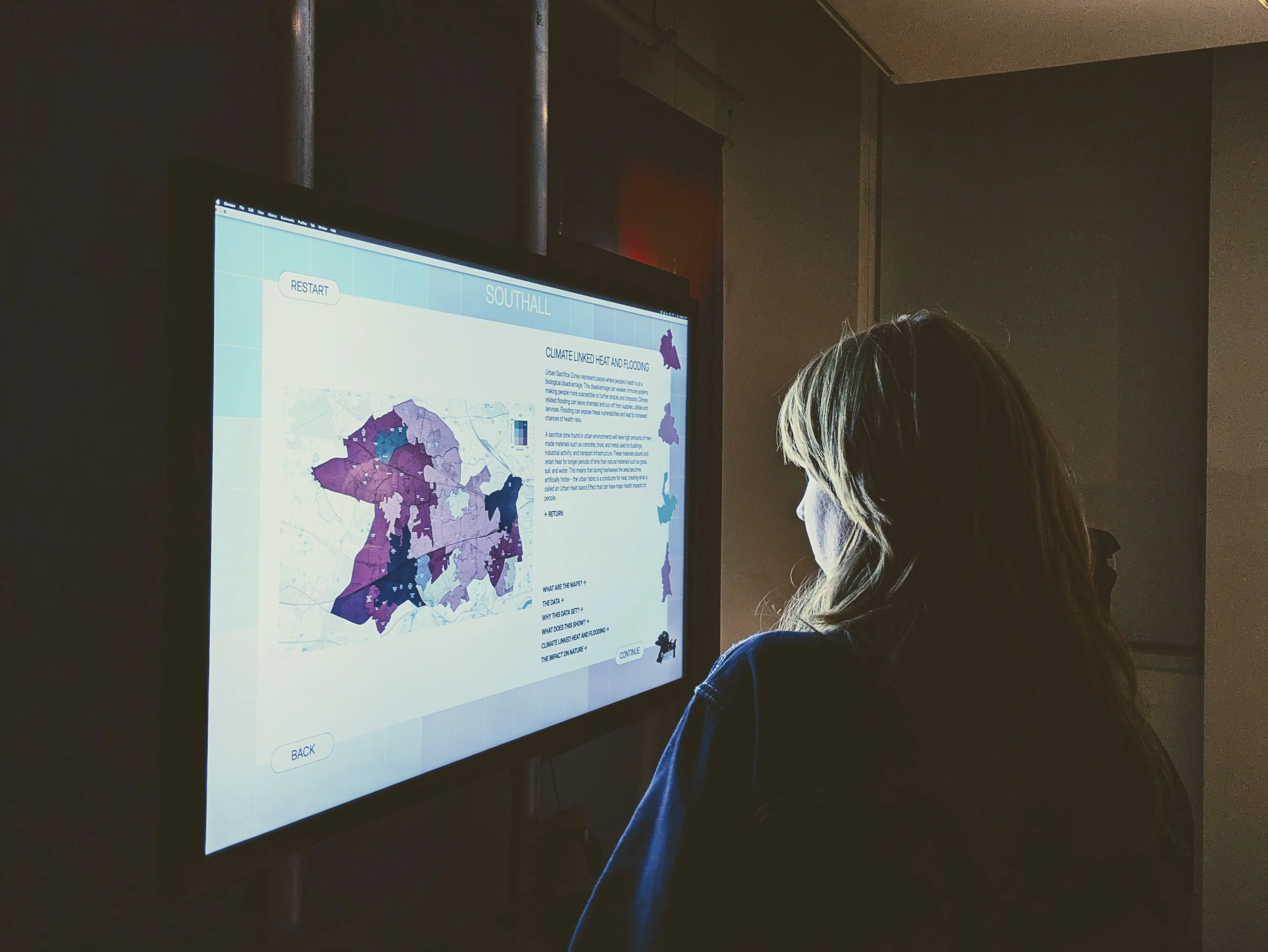
In this lesson, Daniel from the Centric Lab team will use two key reports from Centric Lab's air pollution work to demonstrate case studies applying air pollution data alongside other data sets to advocate for wider, political health justice advocacy.
-
Lesson 5: Tools and Techniques to Evidence with Data
In this lesson, Daniel from the Centric Lab team will review and summarize the ways you can use data to tell the story of your community health for different purposes and audiences.
-
-
Module 4: How to Advocate
-
Lesson 1: Tips for Best Practice on Navigating the System
In this lesson Josh from the Centric Lab team walks us through a framework for how to navigate the politics of place. Josh focuses on the different drivers and motivations of key figures in the advocacy space such as local councillors and policy writers. The lesson aims to help people identify who in the supply chain they want to engage with and what tactics, data, relationships help in advocating.
-
Lesson 2: Advice from an Air Pollution Campaigner
In this lesson Josh from the Centric Lab team speaks to air pollution advocate and campaigner, David Smith about his experiences in advocacy. The lesson focuses on David’s learnings, such as the things he’d do again, and those he’d rather not.
-
Lesson 3.1: Advice from a Local Government Councillor
Councillor Claire Williams covers the role of a councillor, what a councillor can achieve and the limitations of the role. She shares important context on the mechanisms of engaging with council processes and gives helpful insight on how best to get your councillor on side and advocating for you.
-
Lesson 3.2: Advice from a Town Centre Manager on Engaging with your Local Authority
Councillor Claire Williams covers the role of a councillor, what a councillor can achieve and the limitations of the role. She shares important context on the mechanisms of engaging with council processes and gives helpful insight on how best to get your councillor on side and advocating for you.
-
Lesson 3.3: Advice on How to Partner with your Local GP
In this lesson GP and academic Dr. Joanna Dobbin shares with us the role of a GP in contributing to your health advocacy journey. She shares the position of GPs, their duty of care in documenting your experience and their role in working with other local authority departments around safeguarding and public health. This lesson covers some of the contexts in which your local GP can play a role and where to find GPs most likely and available to add their voice to your cause.
-
Lesson 4.1: Organising from the Ground Up (Copy)
In this lesson, Araceli sits down with Angela Fonso, a lead organiser for the West London campaign group Clean Air for Southall and Hayes. Angela shares her story of organising as a ‘general citizen’ with no previous experience, discussing the trials and tribulations along the way.
-
Lesson 4.2: Navigating Messy Systems & Building Resiliency for the Journey
In this lesson Josh from the Centric Lab team talks to Anna and Rebecca about the role of Health Reparations. They cover their experience of working on the ground with their community in reimagining and understanding the problem as well as the solution. Their experience of using what they have around them and stretching the learnings from neighbourhood workshops beyond the street and back into their homes is very insightful.
-