
Module 2: How to understand ecological health
Araceli Camargo
Centric Lab
Featuring:

Daniel Akinola-Odusola
Centric Lab

Hannah Yu-Pearson
Centric Lab

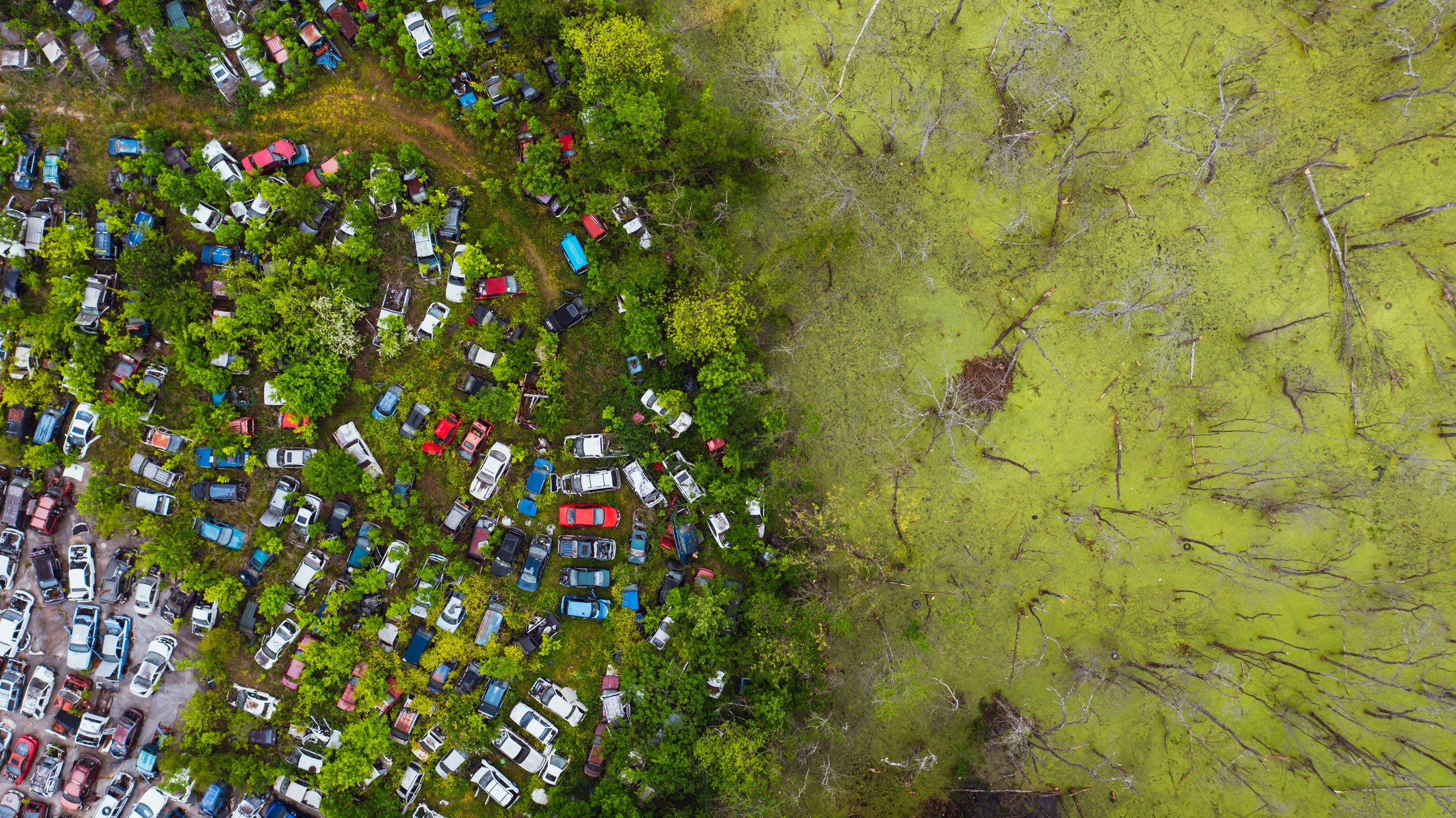
In this lesson Araceli Camargo, Daniel Akinola-Odusola and Hannah Yu-Pearson, all members of the Centric Lab team, define ecological health, the importance and implications of this definition as well as introduce the concept of Cuerpo Territorio.
Key Learnings: Definitions
-
Allocentric means being concerned with the interests of beings beyond yourself, egocentric is the opposite. Allocentric observation would refer to multiple stand points and relationships, rather than centering one’s own experience.
-
Cuerpo Territorio is an indigenous concept that is used as a distinct geographical, decolonial feminist method grounded in the ontological unity between bodies and territories.
-
Ecological health situates health as a balanced interplay between nature and individual, human health acting reciprocally with planetary health. This approach necessitates the idea that the state of health is the result of a constant negotiation between humans and their environment.
-
A widely studied biological system based on a communication between the nervous and endocrine (hormones) systems that is responsible for regulating stress reactions, immune system, and fertility.
-
Racialisation is the process by which ethnic identities are systematically constructed within a society, it is a process of categorising and marginalising.
-
Redlining is a discriminatory practice where financial services such as mortgages, are systematically denied or made inaccessible to residents of specific neighbourhoods, often based on race.
-
TEK is a cumulative body of knowledges, practices and beliefs passed through generations and in present practice, about the relationships between living beings and their environments.
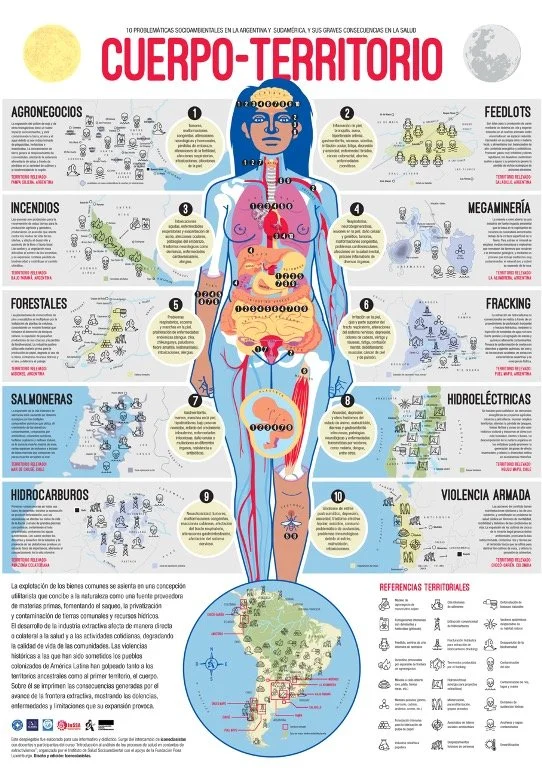
Cuerpo territorio
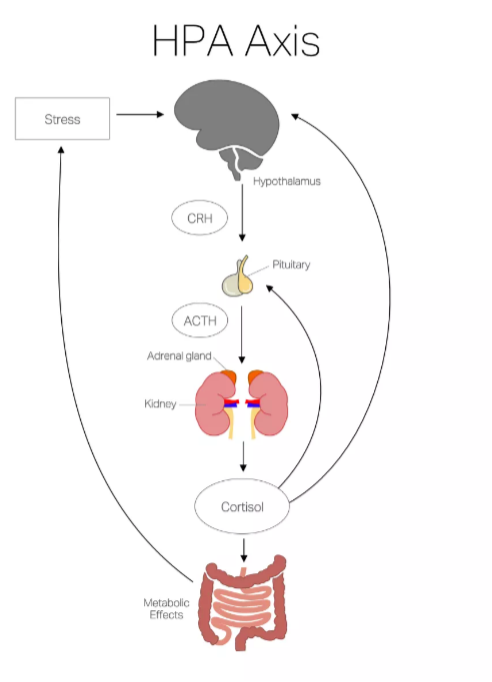
HPA Axis
Key Learnings: Our Thoughts
In understanding why we get sick, we can understand our liberation pathways too.
There’s a pervasive myth that sickness is either a result of our genetics or because of happenstance. This myth is rooted in the idea that sickness emerges from a vacuum and is unrelated to environmental or psychosocial stressors.
There are numerous examples of the interplays of health and place. WEB Du Bois demonstrated the correlation between health and place through geographical mappings. Professor Bullard mapped where African American people lived and where industrial sites were likely to be located. Thus, laying the groundwork for the evidence base needed in the advocacy of ecological health justice.
We have been conditioned to individuate from the ecosystems that we live in. Ecological health emphasises human health acting reciprocally with planetary health, it is a constant negotiation between a person and their environment. Human health is intimately linked to the health of soil, air and water, as well as the communities and neighbourhoods we live and spend time in.
Ecological solidarity is woven into Traditional Ecological Knowledges (TEK), which are knowledges that are alive, plural and born from a dynamic understanding of relationships and constant observation and adaptation between people, Kin and their environments.
Cuerpo Territorio (as coined by ) is a concept that brings together the body and territories as one, whereby when the earth is contaminated and exploited it directly impacts their bodies, that violence and injustice done upon the earth is also reflected on the body. This connection is very literal, not only metaphorical.
AIK Academy is evolving in a way in which understanding ecological health should contribute to community justice, this symbiotic relationship between person and place is what opens up more points of action. There are many ways to engage with this framing whether that be through housing, food, interactions with your GP, etc
What in this lesson stood out for you?
Debate Questions
These questions are framed to help you apply your own experience and perspectives to points raised in this lesson.
In what ways have you conceived of your physical environment impacting your physiological health? Is it direct or more subtle?
Are there patterns of ill health or certain experiences that are falling along demographic lines, but that could be contextualised and understood more deeply?
Reflect on the roots of how you have come to understand your experience? Where did you learn to understand your environment the way you have?

How To…
Create a practice of ecological solidarity with other advocates
When there are individuals or groups advocating for another aspect of your ecology or environment:
When witnessing sites of contamination (e.g. industrial, construction, improper waste disposal) how can you begin to consider the direct and indirect impacts on your community’s health?
•Do you need dedicated space to discuss this with your peers and fellow advocates under your campaign?
•Can people make internal offerings of readings, articles, case studies that have impacted how they understand these impacts?
Begin by connecting and contextualising the experiences of your community with what is going on in your environment, this could be from a health perspective or even a cultural and societal one.
•Are there advocacy groups that you can connect with to contextualise their struggles in the broader context of ecological injustice? How does the health of water, air and soil impact or shape these experiences?
•Are there ways you can show up for each other’s advocacy (such as showing up for each other’s gatherings) to find throughlines?
As varying advocacy groups and individuals, is there space to actively piece together how each of your advocacy practices influence your environment, particularly non-human Kin such as air, water, soil, and each other's goals?
•You could suggest something as formal as a roundtable or informal as a community gathering?
•Are there culture workers who could facilitate this exchange?
Next Lesson:
Module 2 Lesson 2